
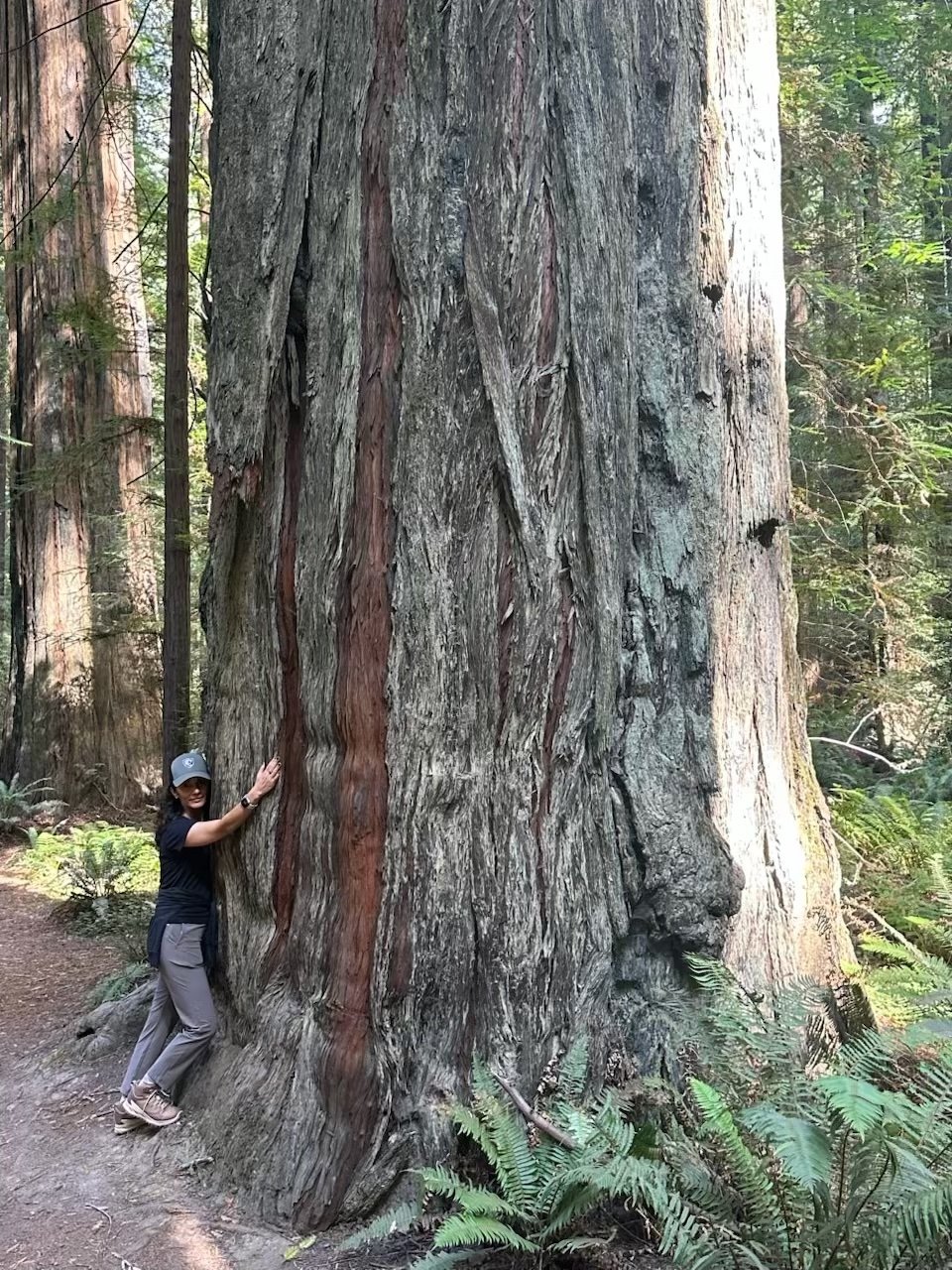
Seeing the colors of leaves, watching trees sway in the breeze, hearing the call of birds, walking barefoot on grass, and getting our hands into the soil can all invite our nervous system to slow down, promoting relaxation and reduce stress.
But our bodies are also interacting with nature in ways we may not consciously notice.
Trees and plants also release natural aromatic compounds into the air called volatile organic compounds (VOCs), including a group known as terpenes. These compounds serve many important functions for plants from communicating and responding to environmental stress to defending against insects and disease and attracting pollinators.
And when we breathe in the air around trees and plants, we are breathing in some of these compounds, too.
Research suggests that exposure to certain plant-derived compounds may contribute to some of the physiological benefits associated with spending time in forests, including reduced blood pressure and cortisol levels, improved mood, reduced perceived stress, increased parasympathetic nervous system activity, our “rest and digest” response, and enhanced natural killer (NK) cell activity.
Of course, these compounds are only one part of the story. The sights, sounds, scents, and rhythms of the natural world all contribute to the restorative experience of being in nature.
A guided forest therapy walk is one way to step away from the “hurry-up” lifestyle so many of us have grown accustomed to and experience what can happen when we slow down in relationship with the more-than-human world.
Forest therapy is a guided experience that provides a container to slow down, reconnect with ourselves through our senses, and deepen our relationship with the rest of nature. Nature can provide us with a reset button for our bodies and minds.
Recent Comments